Eye Bags vs Dark Circles: How to Tell the Difference and Treat Both
Eye bags vs dark circles are two of the most commonly confused under-eye concerns in skincare—and treating one when you actually have the other is one of the most common (and costly) mistakes people make. While both affect the under-eye area and can make you look tired or older than you are, they have completely different causes, appearances, and solutions. Understanding exactly which one you’re dealing with is the first step toward actually fixing it.
Millions of people reach for the wrong product every year because they assume any under-eye issue is the same problem. The truth is that eye bags vs dark circles are two distinct conditions that often coexist but respond to entirely different treatments. Eye bags are a structural issue—caused by fat displacement, fluid retention, and collagen loss that creates a puffy, swollen appearance beneath the eye. Dark circles, on the other hand, are a pigmentation and vascular issue—caused by melanin deposits, visible blood vessels, hollowing shadows, or skin dehydration that creates discoloration rather than puffiness.

Getting this distinction right matters because the best eye creams for dark circles are formulated with brightening and vascular-targeting ingredients like vitamin C, caffeine, and niacinamide—while the most effective treatments for eye bags focus on de-puffing, firming, and reducing fluid retention with peptides, retinol, and cooling agents. Use the wrong one and you’ll spend weeks wondering why nothing is working.
In this guide, we break down exactly what separates eye bags vs dark circles, how to identify which one you have (or if you have both), what causes each condition, and which treatments actually deliver results. We’ve also answered the most common questions dermatologists hear on this topic—including the pinch test, the role of thyroid conditions like Hashimoto’s, and what the single biggest enemy of under-eye bags really is.
Table of Contents
Eye Bags vs Dark Circles: What’s the Difference?
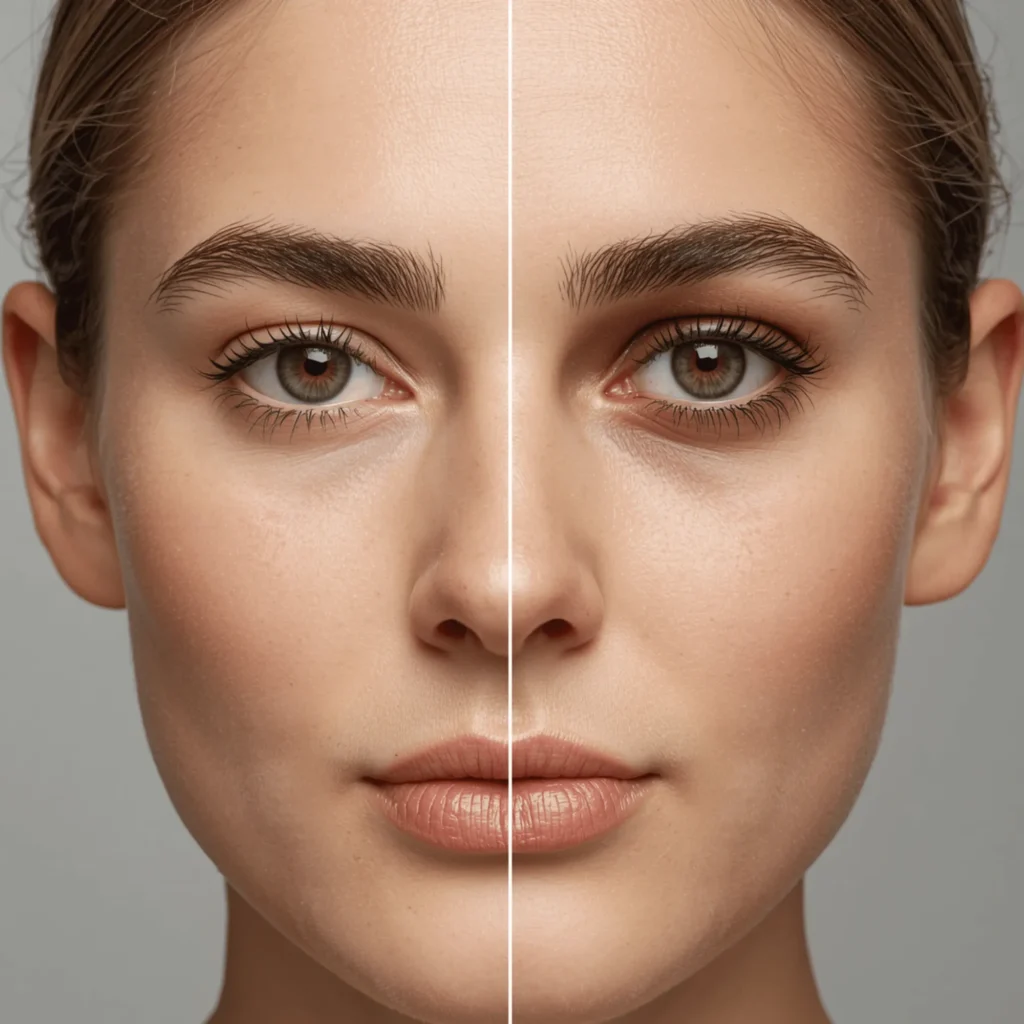
At first glance, both conditions make the under-eye area look tired and aged—but they are fundamentally different problems. Here’s how to tell them apart:
Eye Bags are characterized by:
- A puffy, swollen, or protruding appearance beneath the eye
- Puffiness that may be worse in the morning and improve throughout the day
- A three-dimensional quality—the skin physically bulges outward
- Caused by fat pad displacement, weakened muscle tissue, fluid accumulation, or collagen loss
- More common with age as the structural tissues around the eye weaken and sag
Dark Circles are characterized by:
- Discoloration of the skin beneath the eye—ranging from blue-purple to brown or grey
- A flat, two-dimensional appearance with no physical protrusion
- Shadows that may appear worse under certain lighting or when skin is dehydrated
- Caused by visible blood vessels, melanin overproduction, hollowing tear troughs, or very thin skin
- Can affect any age group, including children and young adults
The key distinction in the eye bags vs dark circles debate:
Eye bags are about volume and structure—the skin physically changes shape. Dark circles are about color and tone—the skin changes in appearance without necessarily changing in shape. You can have one without the other, or you can have both simultaneously, which is extremely common and is why the under-eye area looks so dramatically aged when both conditions occur together.
| Feature | Eye Bags | Dark Circles |
|---|---|---|
| Appearance | Puffy, swollen, protruding | Discolored, shadowed, flat |
| Main cause | Fat displacement, fluid retention | Melanin, blood vessels, hollowing |
| Worst time of day | Morning | Any time, worse when tired |
| Age group | More common 40s+ | Any age |
| Primary treatment | Peptides, retinol, firming agents | Vitamin C, caffeine, niacinamide |
| Fixes overnight? | Partially (fluid-related) | No—requires weeks of treatment |
What Causes Eye Bags?
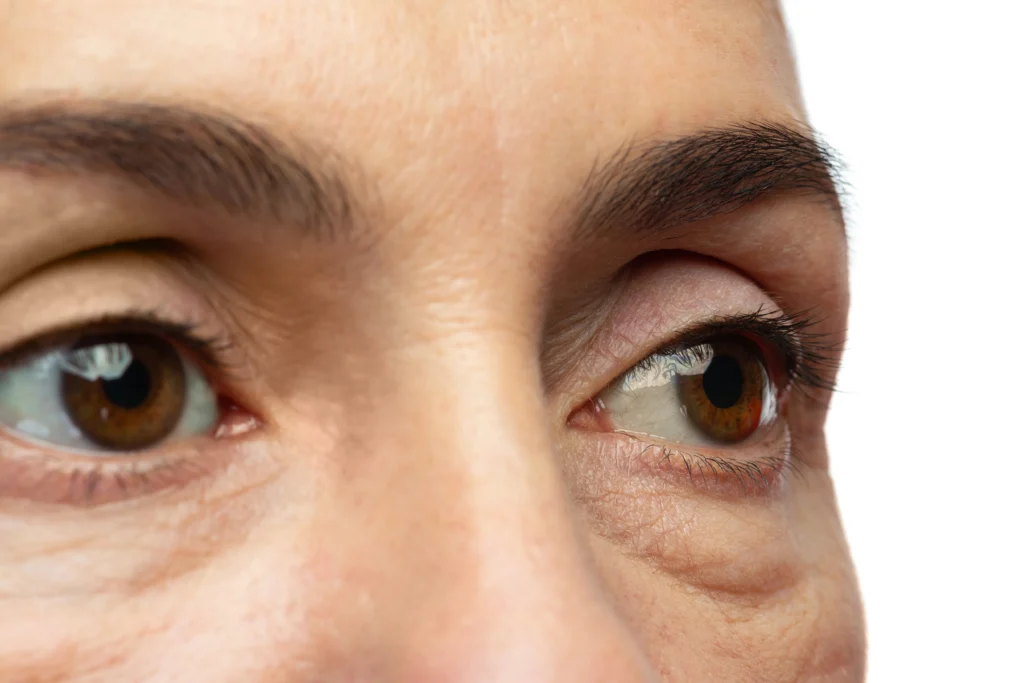
Understanding the root cause of eye bags is essential before choosing any treatment. Eye bags vs dark circles have very different biological drivers, and eye bags in particular can stem from multiple overlapping factors.
1. Fat Pad Displacement
The most common structural cause of permanent eye bags. As we age, the orbital fat pads that cushion the eye migrate forward and downward, creating a visible bulge beneath the lower lid. This type of eye bag does not respond to topical creams alone—peptide-rich firming formulas can slow the process, but surgical intervention (blepharoplasty) is the only permanent fix.
2. Fluid Retention (Edema)
Water accumulation in the delicate tissue beneath the eye causes temporary morning puffiness. This is driven by high-sodium diets, alcohol consumption, hormonal fluctuations, allergies, and sleeping face-down. This type of eye bag responds well to caffeine-based eye creams, cold compresses, and dietary adjustments.
3. Collagen and Elastin Loss
As collagen breaks down with age, the skin beneath the eye loses firmness and elasticity—causing it to sag and create a pouched appearance. Retinol, peptides, and vitamin C-rich eye creams help stimulate collagen production and slow this process over time.
4. Allergies and Sinus Congestion
Seasonal allergies cause inflammation and fluid buildup around the eyes. Repeated rubbing of itchy eyes also weakens the skin’s elasticity over time, worsening both puffiness and discoloration. Managing allergies is one of the most overlooked treatments for both sides of the eye bags vs dark circles equation.
5. Sleep Position and Gravity
Sleeping face-down allows gravity to pull fluid toward the face, pooling it in the loose tissue beneath the eyes overnight. Elevating your head slightly while sleeping is one of the simplest lifestyle changes for reducing morning puffiness.
6. Thyroid and Medical Conditions
Conditions like Hashimoto’s thyroiditis, kidney disease, and certain autoimmune disorders can cause systemic fluid retention that manifests prominently beneath the eyes. If your eye bags are severe, persistent, and accompanied by other symptoms, consulting a physician is important before relying solely on topical treatments.
“A 2024 study published in PubMed
found that prominent orbital fat pads contain significantly higher concentrations of hyaluronic acid than other human tissues, and that HA’s water-attracting properties directly contribute to under-eye puffiness — suggesting fluid and structural factors work together in eye bag formation.”
What Causes Dark Circles?

On the other side of the eye bags vs dark circles discussion, dark circles have their own set of distinct biological drivers:
Vascular Visibility
The skin under the eye is the thinnest on the entire body—often less than 0.5mm. In fair-skinned individuals especially, blue and purple-toned blood vessels show clearly through this translucent layer, creating the classic dark circle appearance. Fatigue, dehydration, and alcohol dilate these vessels further, worsening visibility.
Melanin Overproduction
Sun exposure, genetics, and post-inflammatory hyperpigmentation cause excess melanin to deposit in the under-eye skin, creating brown or grey discoloration. More common in medium to deep skin tones and often genetic in origin. This is the type most responsive to eye creams for dark circles containing vitamin C, niacinamide, and kojic acid.
Structural Shadowing
Volume loss in the mid-face and tear trough area creates a hollow beneath the lower lid that casts a shadow—mimicking the appearance of dark circles even when skin tone is even. This type is structural rather than pigmentary and responds best to filler or peptide-based volumizing eye creams for dark circles.
Dehydration
When skin is severely dehydrated it becomes thinner and more translucent, amplifying the appearance of underlying vessels and hollows. Hyaluronic acid and ceramide-rich formulas address this directly.
“According to a 2025 clinical study in the Journal of Clinical and Aesthetic Dermatology
, periorbital hyperpigmentation is a multifactorial condition influenced by genetics, UV exposure, and post-inflammatory pigmentation — and responds best to multi-targeted topical treatment combining brightening actives.”
The 5 Best Eye Bags & Dark Circle Creams in 2026
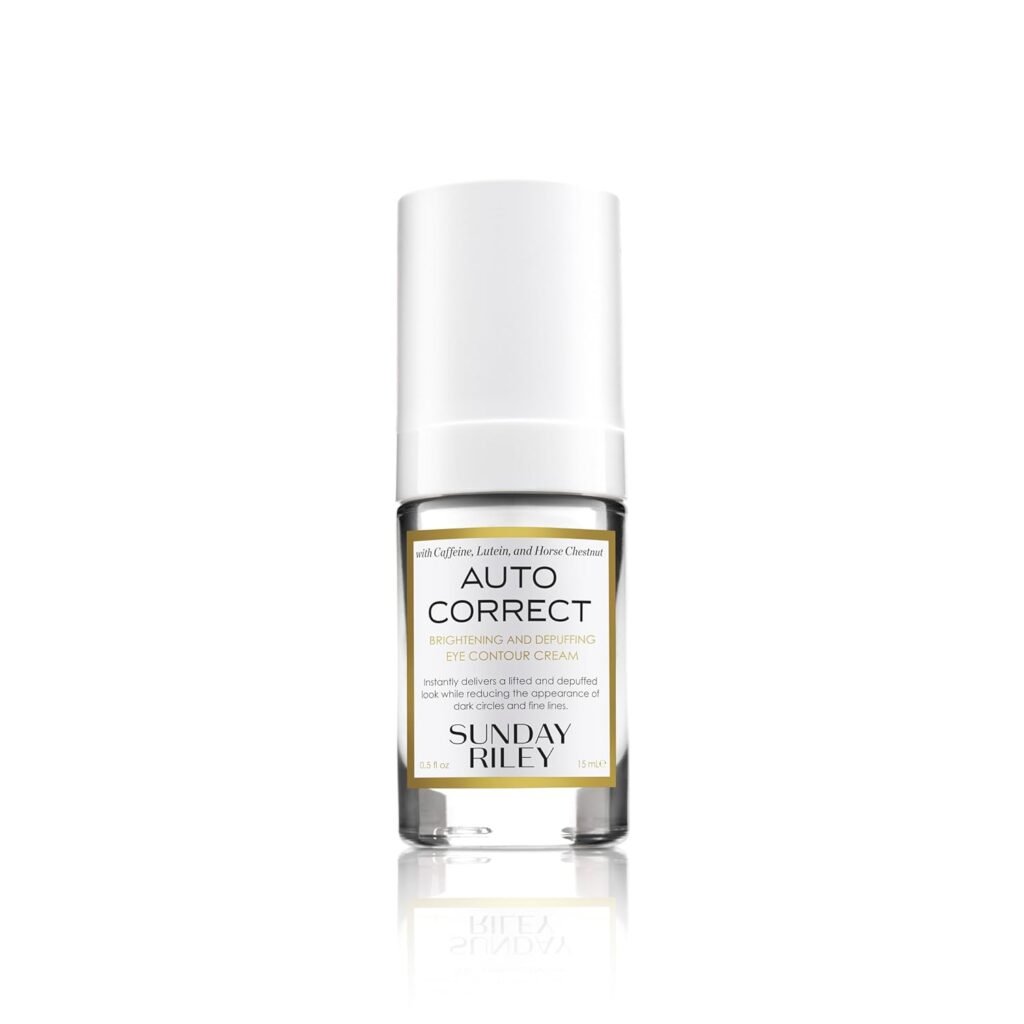
Sunday Riley Auto Correct Brightening & Depuffing Eye Cream
REASONS TO BUY
✅ Brazilian ginseng and caffeine visibly reduce puffiness and dark circles fast
✅Brightens and adds a natural luminous sheen without makeup
✅Lightweight formula blends effortlessly into skin
✅Addresses puffiness, dark circles, and fine lines in one step
REASONS TO AVOID
⚠️ Premium price point not suited for every budget
⚠️Results are gradual for deep structural circles
⚠️May be too rich for very oily under-eye skin
Sunday Riley’s Auto Correct is a cult-favorite premium eye cream that tackles dark circles, puffiness, and fine lines all at once. Packed with Brazilian ginseng root extract, caffeine, and brightening actives, it’s one of the most well-rounded formulas on the market for anyone dealing with multiple under-eye concerns simultaneously.
REASONS TO BUY
✅ Five forms of vitamin C dramatically improve dark tone and uneven skin
✅Eight peptides target fine lines and firmness simultaneously
✅Ceramides, plant oils, and cucumber hydrate and protect the barrier
✅Dermatologist-recommended for shadow-causing bags and pigmentation
REASONS TO AVOID
⚠️ Can pill slightly under makeup for some users
⚠️High vitamin C concentration may cause tingling on very sensitive skin
⚠️One of the pricier options in the brightening category
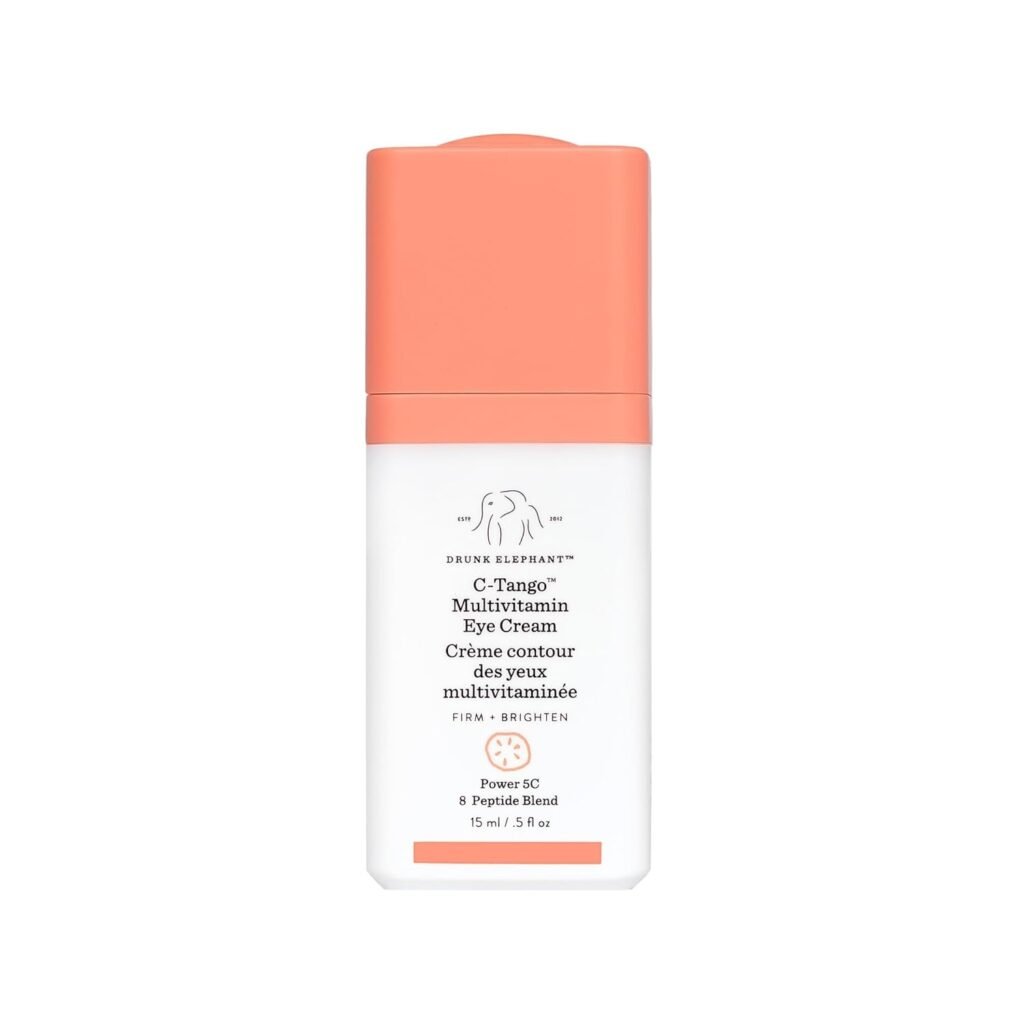
Drunk Elephant’s C-Tango is a powerhouse brightening eye cream that brings together five forms of vitamin C alongside eight peptides to target pigmentation, fine lines, and loss of firmness. It’s one of the most ingredient-dense brightening eye creams for dark circles available and consistently ranks among dermatologists’ top recommendations for melanin-driven discoloration.
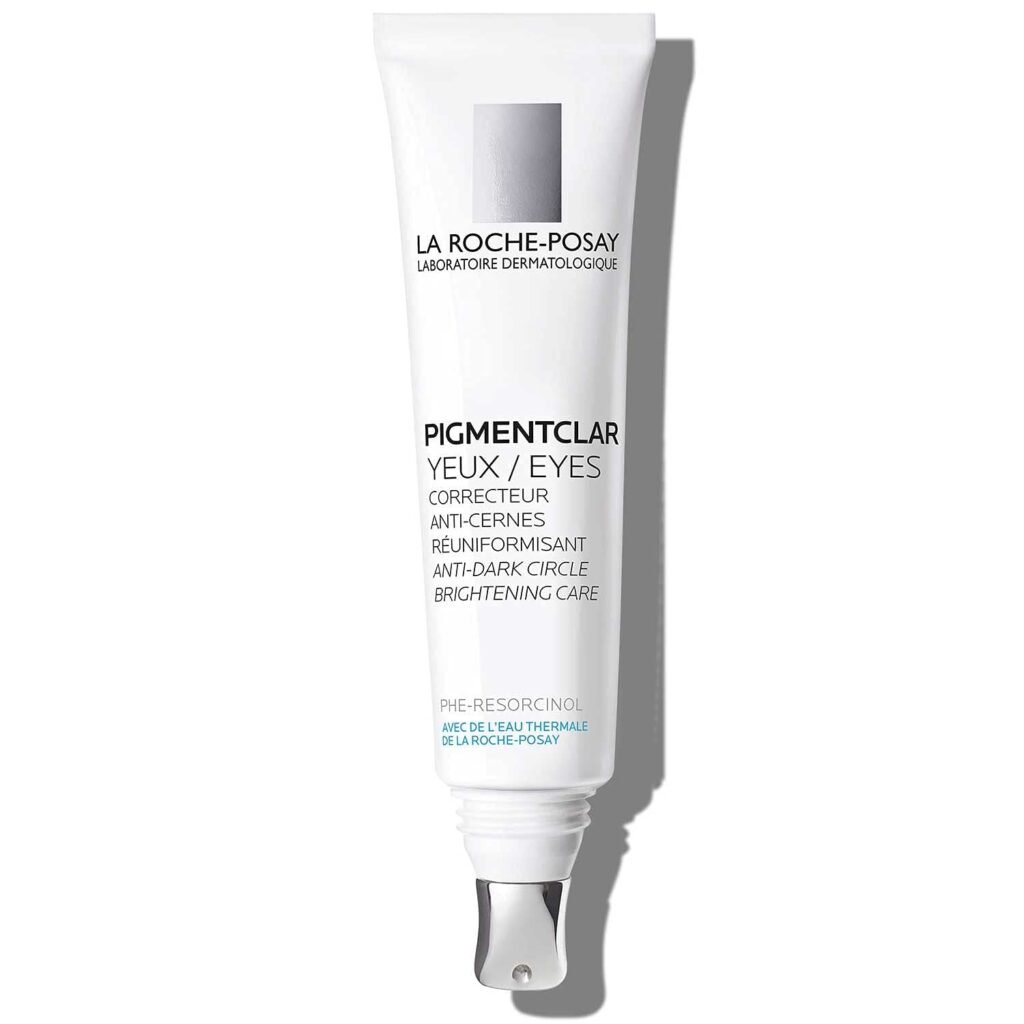
La Roche-Posay Pigmentclar Eye Cream
REASONS TO BUY
✅ Dermatologist’s #1 recommended brand for sensitive skin
✅LHA and phe-resorcinol specifically target stubborn hyperpigmentation
✅Niacinamide brightens and evens tone gently over time
✅Fragrance-free and tested on sensitive and allergy-prone skin
REASONS TO AVOID
⚠️ Focused purely on pigmentation—limited benefit for vascular or structural circles
⚠️Results require 8–10 weeks of consistent use
⚠️Lighter texture may not satisfy those wanting a richer, more luxurious feel
La Roche-Posay is one of the most trusted dermatologist-recommended skincare brands in the world, and Pigmentclar Eye Cream is their dedicated solution for hyperpigmentation-driven dark circles. Named the best overall eye cream for dark circles by Oprah Daily in 2026, this formula uses a proprietary combination of LHA, niacinamide, and phe-resorcinol to target melanin at the source.
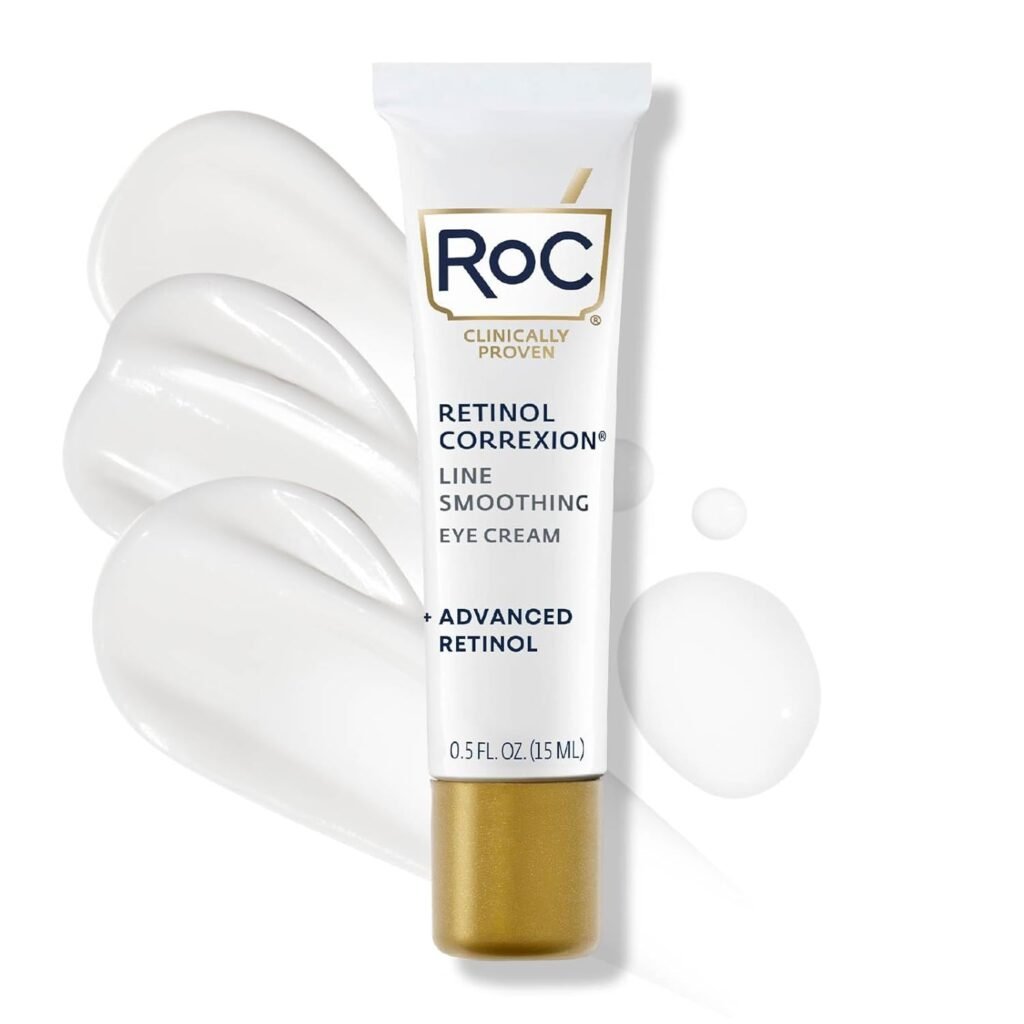
RoC Retinol Correxion Eye Cream
REASONS TO BUY
✅Proven retinol formula accelerates cell turnover and fades pigmentation
✅Hyaluronic acid hydrates and plumps simultaneously
✅One of the most affordable retinol eye creams available
✅Dermatologist-recommended and widely available on Amazon
REASONS TO AVOID
⚠️ Retinol requires a slow introduction—start every other night to avoid irritation
⚠️Not recommended during pregnancy
⚠️Takes 10–12 weeks for full pigmentation results
RoC has been a gold-standard name in retinol skincare for decades, and their Retinol Correxion Eye Cream is one of the most trusted drugstore formulas for tackling dark circles, fine lines, and puffiness with proven vitamin A technology. It consistently earns top marks from dermatologists for delivering clinical-grade retinol results at an accessible price.
ISDIN K-Ox Eyes Cream
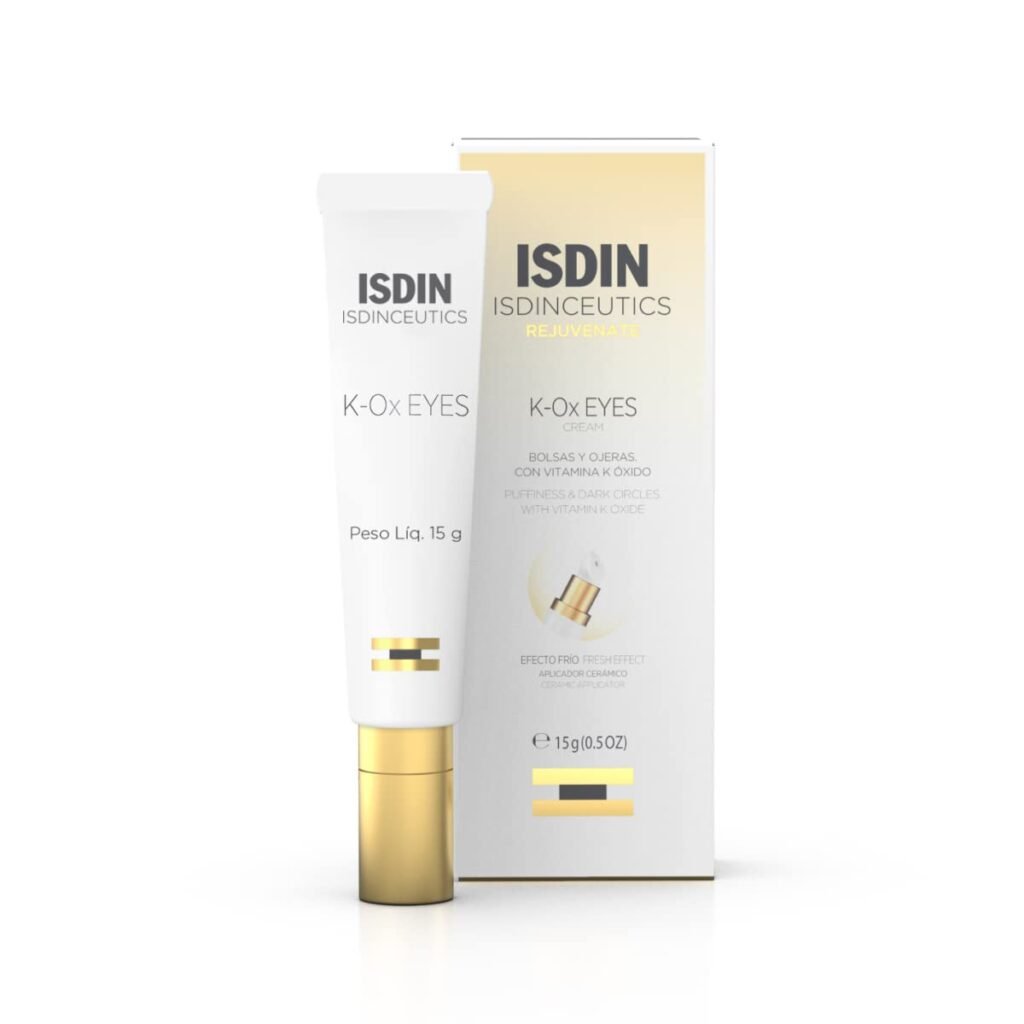
REASONS TO BUY
✅ Vitamin K and haloxyl specifically target vascular dark circles
✅ Ceramic cooling applicator reduces puffiness on contact instantly
✅ Niacinamide maintains firmness and evens skin tone over time
✅ Dermatologist-personally recommended for daily brightening use
REASONS TO AVOID
⚠️ Primarily effective for vascular circles—less impactful for melanin-driven pigmentation
⚠️ Higher price point than drugstore alternatives
⚠️ Ceramic applicator requires cleaning regularly to avoid bacterial buildup
ISDIN K-Ox Eyes is a rising favorite among dermatologists and one of the most uniquely formulated eye creams for dark circles on this list. It combines vitamin K, haloxyl, and niacinamide in a formula designed specifically to address vascular dark circles—the blue-purple type caused by visible blood vessels—while its ceramic cooling applicator delivers an immediate de-puffing sensation on contact.
The Pinch Test for Eye Bags
One of the most useful tools in the eye bags vs dark circles diagnostic toolkit is the simple pinch test—a quick at-home method dermatologists use to determine whether your eye bags are primarily structural (fat-related) or fluid-related (edema).
How to Perform the Pinch Test:
- Look in a mirror in good, even lighting
- Gently pinch the skin directly beneath your lower lid between your thumb and index finger
- Hold for two to three seconds, then release
- Observe the skin’s behavior immediately after releasing
What the Results Mean:
- Skin snaps back quickly — Your skin still has good elasticity. Your puffiness is likely fluid-related or early-stage collagen loss. Topical treatments, dietary changes, and lifestyle adjustments will likely produce visible improvement.
- Skin returns slowly (slow recoil) — Collagen and elastin have weakened. You’re dealing with structural laxity. Retinol, peptides, and firming eye creams for dark circles and bags can help slow progression, but results will be gradual.
- Skin stays pinched or “tented” — Significant elasticity loss. This level of structural sagging is unlikely to respond meaningfully to topicals alone. A consultation with a dermatologist or cosmetic surgeon is worth considering.
- Puffiness doesn’t change when pinched — The bulge is composed of displaced fat rather than fluid. Fat pad eye bags are permanent and structural—the most effective treatment at this stage is surgical blepharoplasty or filler to camouflage the transition zone.
The pinch test is a quick, zero-cost way to set realistic expectations before investing in any eye cream or treatment—and it’s one of the most practical tools in the eye bags vs dark circles self-diagnosis process.
Can Hashimoto’s Cause Dark Circles?
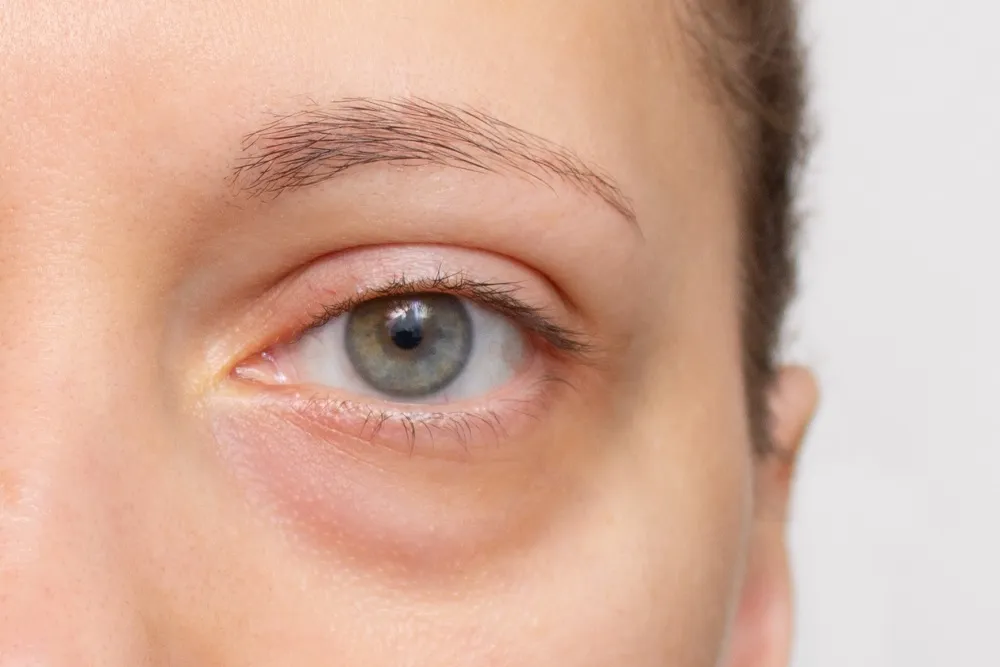
Yes—and this is one of the most underdiagnosed connections in the eye bags vs dark circles conversation. Hashimoto’s thyroiditis is an autoimmune condition in which the immune system attacks the thyroid gland, leading to hypothyroidism (an underactive thyroid). The resulting hormonal and metabolic disruptions have a direct and visible effect on the skin around the eyes.
How Hashimoto’s Contributes to Dark Circles and Eye Bags:
- Fluid retention (myxedema) — Hypothyroidism causes the body to retain a specific type of fluid called mucin in the tissues. Unlike regular edema, myxedematous swelling is firm rather than soft and doesn’t indent when pressed. It creates persistent, puffy under-eye bags that don’t improve with typical de-puffing treatments.
- Pale, thinned skin — Reduced thyroid hormone slows cell turnover and circulation, leaving skin pale and thin. This makes underlying blood vessels far more visible—creating or worsening vascular dark circles in the eye bags vs dark circles spectrum.
- Iron deficiency anemia — Hashimoto’s frequently coexists with or causes anemia, which reduces the oxygen-carrying capacity of the blood. Deoxygenated blood appears darker and more blue-toned, making vascular circles significantly more visible.
- Chronic fatigue — The profound fatigue associated with hypothyroidism leads to poor sleep quality, which dilates blood vessels and worsens both puffiness and discoloration simultaneously.
- Periorbital edema — In more advanced or poorly managed cases, Hashimoto’s can cause periorbital (around the eye) swelling that is persistent and resistant to lifestyle changes or topical treatment.
What to do: If you suspect thyroid dysfunction is driving your under-eye concerns, consult your physician for a full thyroid panel including TSH, Free T3, Free T4, and thyroid antibodies. Properly managing your thyroid condition with medication and lifestyle support will do more for your under-eye appearance than any topical product alone—and can make eye creams for dark circles significantly more effective once the underlying hormonal issue is addressed.
“According to ophthalmological research published in 2025, hypothyroidism directly causes periorbital fluid retention and skin thinning that leads to persistent dark circles resistant to standard topical treatments.”
ophthalmogen
What Is the Main Enemy of Under-Eye Bags?
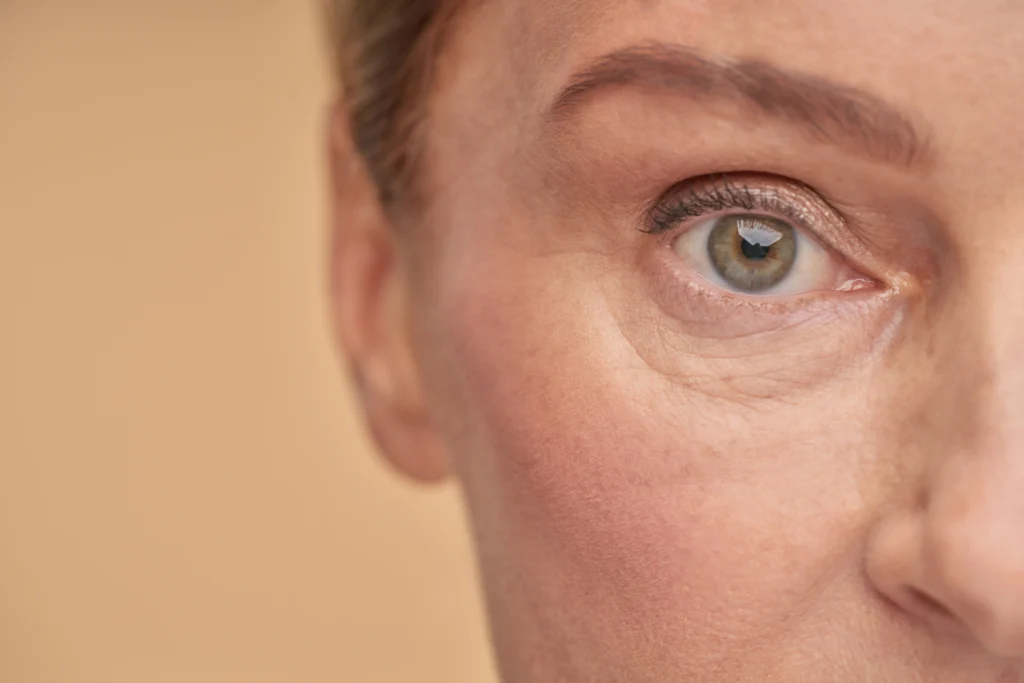
In the eye bags vs dark circles battle, the single biggest enemy of under-eye bags is sodium (salt). Here’s why:
High sodium intake causes the body to retain water in order to maintain fluid balance. Because the skin beneath the eyes is exceptionally thin, loose, and poorly supported by underlying tissue, it’s one of the first places excess fluid visibly accumulates—particularly overnight when you’re lying flat and gravity isn’t helping drain it away.
Other major enemies of under-eye bags include:
- Alcohol — A powerful diuretic that disrupts fluid balance and causes pronounced morning puffiness by dehydrating the body while simultaneously triggering inflammation
- Poor sleep — Insufficient or low-quality sleep elevates cortisol, increases inflammation, and prevents the lymphatic system from clearing excess fluid from facial tissues overnight
- Allergies — Histamine release from allergens dilates blood vessels and increases fluid permeability in the tissue around the eyes, causing both puffiness and discoloration
- UV exposure — Breaks down collagen beneath the eyes, weakening the structural support that keeps fat pads in place and skin firm
- Sleeping face-down — Gravity pools fluid in the face throughout the night, waking you up with exaggerated puffiness
- Chronic dehydration — Counterintuitively, not drinking enough water causes the body to hold onto what little it has—often in facial tissues
The fastest fixes for eye bags:
- Reduce sodium intake to under 2,300mg per day
- Apply a cold compress or chilled caffeine eye serum in the morning
- Sleep on your back with your head slightly elevated
- Manage seasonal allergies with antihistamines or nasal spray
- Stay well-hydrated throughout the day to signal to your body it doesn’t need to hoard fluid
Best Treatments for Eye Bags vs Dark Circles
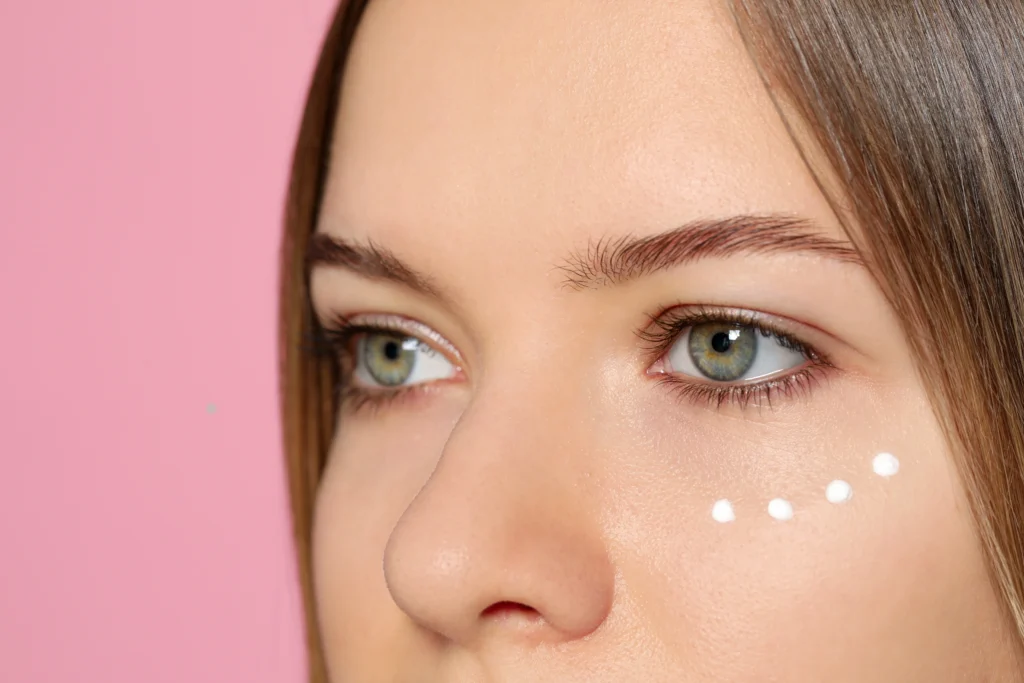
Now that you understand the distinction between eye bags vs dark circles, here’s a clear breakdown of the most effective treatments for each:
For Eye Bags:
- Caffeine serums — Constrict blood vessels and temporarily reduce fluid-related puffiness fast
- Retinol eye creams — Stimulate collagen production to firm and thicken loose skin over time
- Peptide formulas — Signal skin to rebuild elastin and structural support beneath the lower lid
- Cold compresses — Reduce inflammation and fluid accumulation immediately
- Lymphatic massage — Gentle tapping motions around the orbital bone encourage fluid drainage
- Blepharoplasty — Surgical fat removal for permanent, structural eye bags that don’t respond to topicals
For Dark Circles:
- Vitamin C eye creams — Fade melanin-driven pigmentation and stimulate collagen over 8–12 weeks
- Niacinamide formulas — Reduce melanin transfer and even skin tone gently and reliably
- Caffeine serums — Constrict vessels and reduce vascular visibility for blue-purple circles
- Hyaluronic acid creams — Plump dehydrated skin to reduce the appearance of hollow shadows
- SPF application — Prevents UV-driven melanin worsening every single day
- Hyaluronic acid filler — Most effective clinical option for structural tear trough hollowing
FAQ – Eye Bags vs Dark Circles

Are bags under eyes the same as dark circles?
No—eye bags vs dark circles are two distinct under-eye conditions that are frequently confused but have very different causes and treatments. Eye bags are a structural issue involving fat displacement, fluid retention, and collagen loss that creates a puffy, swollen protrusion beneath the lower lid. Dark circles are a color and tone issue caused by visible blood vessels, melanin deposits, or hollowing shadows that create discoloration without necessarily causing physical puffiness. You can have one condition without the other, or both simultaneously—which is common as skin ages and multiple factors converge in the same area.
What is the pinch test for eye bags?
The pinch test is a simple at-home method used to assess the nature of your eye bags. Gently pinch the skin beneath your lower lid, hold for two to three seconds, then release and watch how the skin responds. If it snaps back quickly, your puffiness is likely fluid-related and will respond to topical treatments and lifestyle changes. If it returns slowly or stays tented, you’re dealing with collagen loss or structural fat displacement that requires more targeted clinical intervention. It’s one of the most useful tools in the eye bags vs dark circles self-diagnosis process and helps set realistic expectations before purchasing any treatment.
What is the main enemy of under-eye bags?
The single biggest enemy of under-eye bags is excess sodium. High salt intake causes the body to retain fluid, and because the skin beneath the eyes is thin and loosely supported, it’s one of the first places that excess water visibly accumulates—especially overnight. Alcohol, poor sleep, allergies, UV exposure, and chronic dehydration are close runners-up. Addressing dietary sodium is the fastest and most impactful lifestyle change you can make for visible improvement in eye bags vs dark circles driven by fluid retention.
Can Hashimoto’s cause dark circles?
Yes, absolutely. Hashimoto’s thyroiditis causes hypothyroidism, which leads to fluid retention (myxedema), pale and thinned skin, poor circulation, and frequent iron-deficiency anemia—all of which directly worsen both dark circles and eye bags. The resulting periorbital swelling and vascular visibility are often resistant to standard topical eye creams for dark circles until the underlying thyroid condition is properly managed with medical treatment. If you suspect Hashimoto’s or another thyroid condition is contributing to your under-eye concerns, consult a physician for a full thyroid panel before relying solely on skincare products.
Final Verdict: Eye Bags vs Dark Circles
Understanding the difference between eye bags vs dark circles is the foundation of any effective under-eye treatment plan. Eye bags are structural—driven by fat, fluid, and collagen loss—while dark circles are tonal, driven by pigmentation, blood vessels, and dehydration. Treating them requires different ingredients, different approaches, and in some cases, different specialists.
The good news is that both conditions are highly treatable with the right strategy. Whether you start with a caffeine serum for morning de-puffing, a vitamin C eye cream for dark circles, or a peptide-rich formula to firm and rebuild—consistency and correct diagnosis will always outperform expensive products used blindly. Factor in lifestyle habits like reducing sodium, managing allergies, staying hydrated, and applying SPF daily, and you have a comprehensive plan that addresses eye bags vs dark circles from every angle.
And if an underlying condition like Hashimoto’s is in the picture, addressing it medically will unlock results that no topical product alone can deliver. Know your skin, match your treatment to your cause, and give it time—your under-eye area will thank you.
Note: This post contains Amazon affiliate links. If you make a purchase through these links, a small commission may be received at no extra cost to you.